Your Home Deserves a Painter You Can Trust
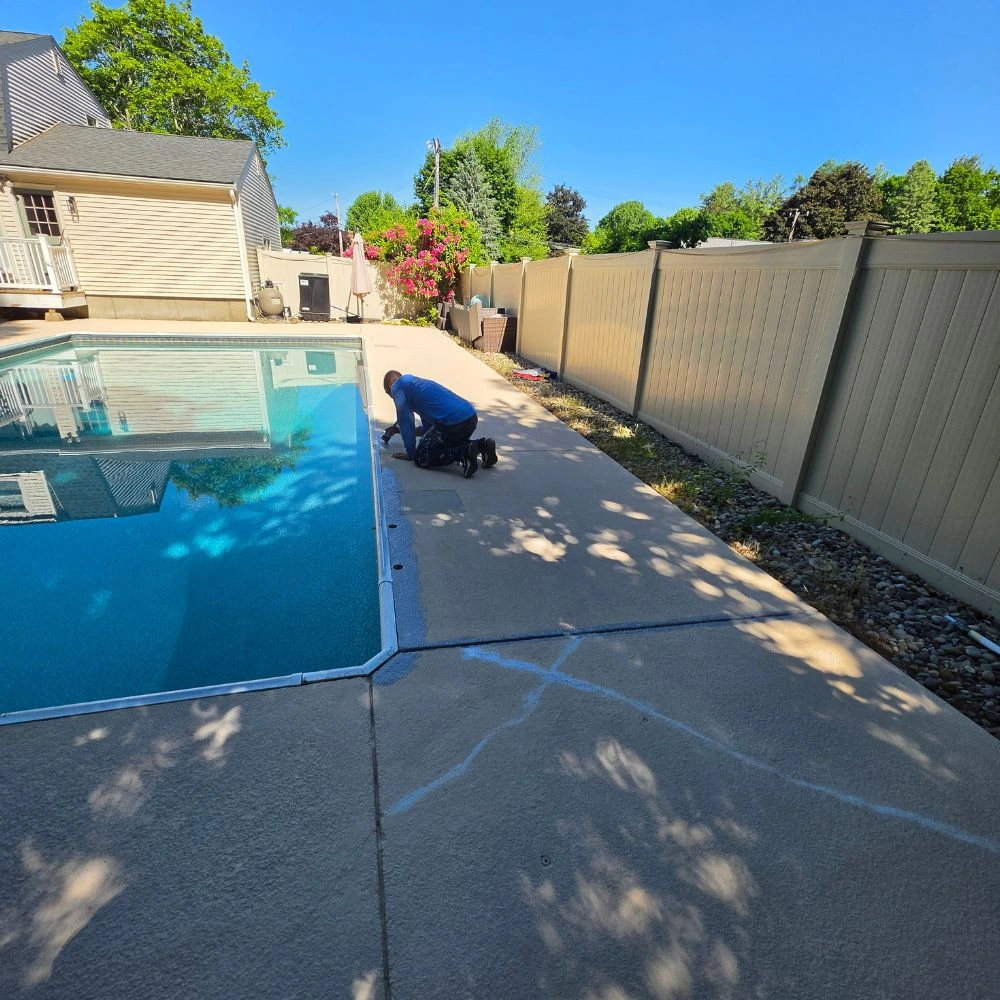
When looking for concrete pool deck repair near Worcester, chances are you’ve already noticed something doesn’t look right around your pool. Maybe a crack keeps getting wider, the surface feels rough under bare feet or water sits in the same spot after every rainstorm. Those aren’t just cosmetic issues. They often point to underlying problems that can become safety hazards or lead to more expensive repairs if ignored.
Around Worcester and throughout Central Massachusetts, concrete pool decks take a beating. Freeze thaw cycles, heavy snow, spring rain, summer heat and years of foot traffic all affect the concrete differently than in warmer climates. Knowing what to look for can help you decide whether a simple repair is enough or whether a larger restoration project makes more sense.
TL;DR
| Who needs concrete pool deck repair? | Homeowners with cracked, uneven, spalling, slippery, stained or aging concrete around swimming pools. |
| Common warning signs | Cracks, surface scaling, loose concrete, settlement, standing water, exposed aggregate, trip hazards and failing joints. |
| Why timely repair matters | Early repairs help prevent water intrusion, freeze thaw damage, larger structural problems and expensive resurfacing or replacement. |
| When to call a professional | If cracks continue growing, slabs become uneven, drainage problems develop or sections of concrete begin breaking apart. |
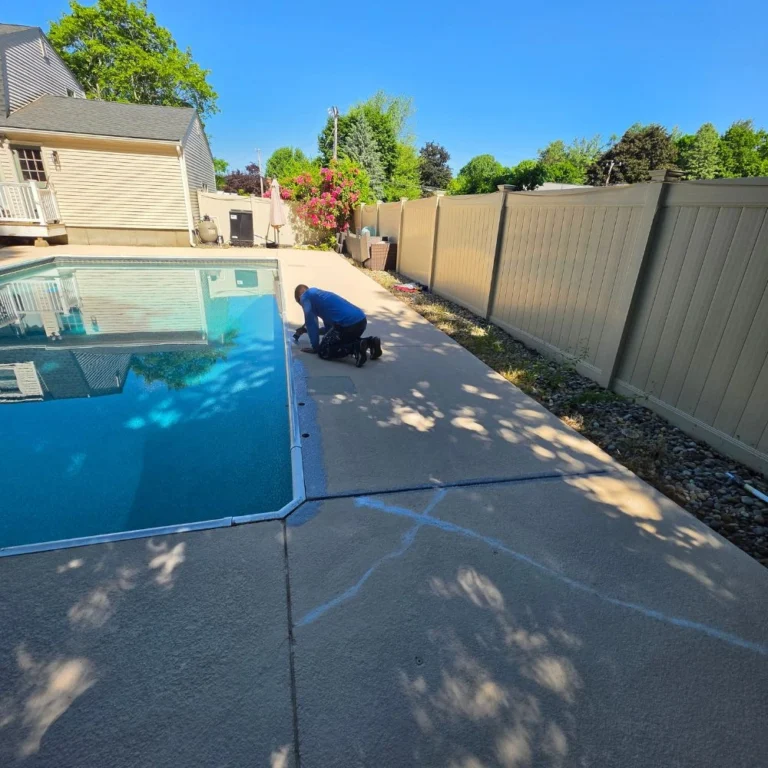
Why Concrete Pool Deck Damage Happens Faster
Many homeowners assume concrete is permanent because it feels solid underfoot. In reality, concrete is constantly expanding, contracting, absorbing moisture and responding to temperature changes.
Around Worcester, winter is often the biggest culprit. Water enters tiny pores and hairline cracks in the concrete. As temperatures drop below freezing, that water expands. The pressure created inside the slab gradually widens cracks, loosens the surface and weakens the concrete from within.
By summer, UV exposure, pool chemicals, heavy furniture and constant foot traffic add another layer of stress. Years of these seasonal changes slowly wear down even a well installed concrete pool deck.
Professional contractors don’t simply look at the visible crack. They try to determine why the crack formed in the first place. Repairing the symptom without correcting the cause usually means the damage returns.
1. Cracks That Continue Growing
Not every crack means your pool deck is failing. Concrete naturally develops minor shrinkage cracks as it cures. These are usually thin, stable and mostly cosmetic. The concern starts when cracks become wider, longer, or change over time.
What professionals look for
- Cracks that continue extending each season.
- Multiple cracks connecting into patterns.
- Vertical movement between slab sections.
- Water collecting inside cracks.
- Cracks crossing control joints.
- Rust colored staining that may indicate reinforcement corrosion.
One mistake homeowners often make is filling every crack with hardware-store concrete filler. If the concrete continues moving because of settlement or drainage issues, the repair often separates within months. Professionals inspect both the crack and the surrounding slab before recommending the right repair method.
2. Uneven Concrete Creates Trip Hazards
A pool deck should feel smooth and level. If one section sits higher than another, someone walking barefoot may catch their foot before noticing the elevation change. Settlement can occur for several reasons:
Common causes
- Poor soil compaction during original construction.
- Water washing away supporting soil.
- Tree root movement.
- Drainage problems.
- Years of freeze thaw expansion.
Many homeowners assume uneven concrete automatically requires replacement. That’s not always true. If the concrete itself remains structurally sound, lifting or leveling techniques may restore the surface without replacing the entire slab. The key is determining whether the slab has simply settled or if it has fractured beyond repair.
3. Surface Scaling and Flaking
Scaling occurs when the top layer of concrete begins peeling away. It usually starts small. The surface may feel rough under bare feet or appear lighter in color. Eventually, larger pieces begin breaking loose.
Common signs of scaling
- Rough texture.
- Small flakes coming off.
- Aggregate becoming visible.
- Surface becoming dusty.
- Edges breaking apart.
- Increased slipperiness when wet.
Many homeowners mistake scaling for normal aging. In reality, scaling often indicates moisture damage or repeated freeze thaw exposure. Once the protective surface disappears, water penetrates even deeper into the slab, accelerating deterioration.
4. Standing Water After Rain
A properly installed concrete pool deck should direct water away from both the pool and the house. After a storm, take a walk around your pool. If puddles remain long after surrounding areas dry, the deck may have developed low spots.
Poor drainage can contribute to:
- Surface deterioration.
- Slip hazards.
- Faster crack growth.
- Soil erosion beneath slabs.
- Mold and algae growth.
- Water intrusion beneath decorative coatings.
Contractors typically check drainage before recommending cosmetic resurfacing. Installing a beautiful new surface over poor drainage simply traps the underlying problem.
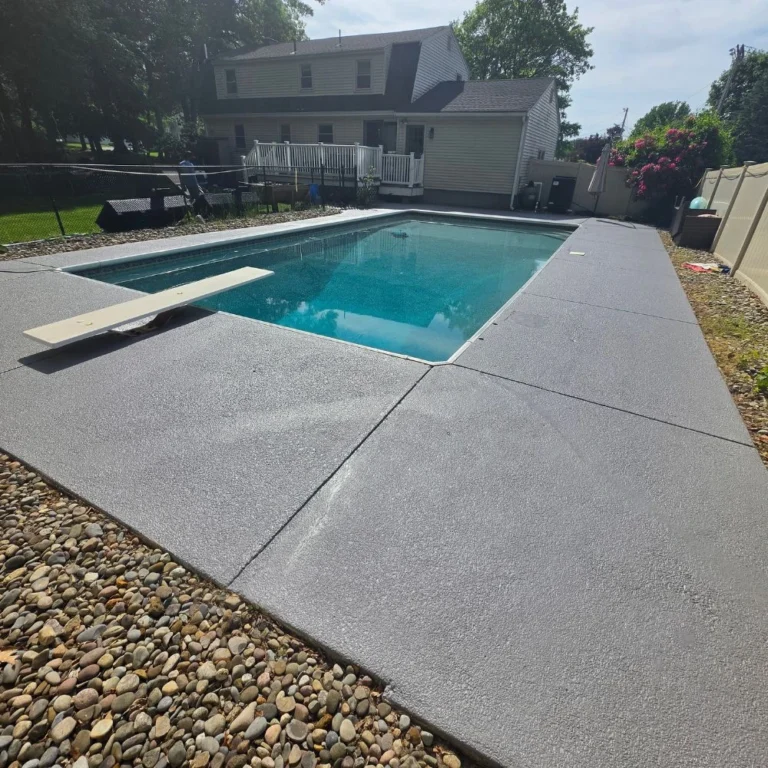
5. Loose or Damaged Pool Coping
Pool coping often receives less attention than the deck itself, yet it protects one of the most important transition areas around the pool. Loose coping stones or concrete coping may indicate movement below the surrounding deck.
Warning signs include
- Gaps opening between coping sections.
- Loose coping pieces.
- Missing joint material.
- Cracks radiating from the pool edge.
- Water entering expansion joints.
Ignoring coping damage allows water to reach areas beneath both the coping and adjacent concrete. That hidden moisture often causes more expensive repairs later.
6. Spalling Is More Than Cosmetic
Spalling happens when pieces of concrete break away from the surface. Unlike simple scaling, spalling often extends deeper into the slab. This type of damage commonly results from repeated moisture intrusion, freeze thaw cycles, corrosion of embedded reinforcement or poor original concrete placement.
How professionals inspect spalling
- Tap the surface to locate hollow areas.
- Measure repair depth.
- Check nearby reinforcement.
- Evaluate moisture penetration.
- Determine whether deterioration is isolated or widespread.
If only isolated areas have failed, localized repair may be appropriate. If deterioration extends throughout the deck, resurfacing or replacement may provide a longer-lasting solution.
7. Expansion Joints Are Missing or Failing
Expansion joints give concrete room to move with changing temperatures. Without them, the slab relieves stress by cracking. Old joint material also deteriorates over time. When joints remain open, water enters beneath the slab and contributes to settlement.
Inspect expansion joints for
- Missing sealant.
- Separation.
- Weed growth.
- Standing water.
- Loose joint filler.
- Crumbling edges.
Many homeowners focus entirely on visible cracks while overlooking deteriorated joints that caused those cracks in the first place.
8. Decorative Concrete Is Peeling
Stamped concrete, stained concrete and decorative concrete coatings add beauty but require maintenance. When coatings begin peeling, bubbling or wearing unevenly, the issue may not be the coating itself.
Often the underlying concrete contains excess moisture or previous repairs that were never properly prepared. Professionals usually test the concrete surface before applying new coatings. Skipping surface preparation is one of the biggest reasons decorative concrete repairs fail.
Book Your Free Estimate Today!
Ready to transform your space? Our team is here to help you get started with a no-obligation, on-site estimate. Whether it’s a quick refresh or a full makeover, we’ll guide you every step of the way.
How Professionals Inspect a Concrete Pool Deck
A thorough inspection involves much more than measuring crack width. Experienced contractors evaluate how the entire deck functions.
A typical inspection includes
- Overall slab movement.
- Crack patterns.
- Drainage evaluation.
- Expansion joint condition.
- Pool coping inspection.
- Surface scaling.
- Spalling depth.
- Settlement around the perimeter.
- Existing repair quality.
- Previous coatings and sealers.
They also ask questions about when the damage first appeared. A crack that hasn’t changed in ten years is very different from one that doubled in size after a single winter. That history helps determine the most appropriate repair strategy.
Problems Homeowners Commonly Misdiagnose
One of the biggest misconceptions is assuming every crack means replacement. The opposite mistake is assuming every crack can simply be filled.
Often misunderstood issues
- Hairline cracks mistaken for structural failure.
- Settlement blamed on old age instead of drainage.
- Scaling mistaken for dirt.
- Spalling confused with surface wear.
- Slippery concrete blamed on sealers instead of algae.
- Uneven slabs ignored because they “aren’t that bad”.
Professional diagnosis helps identify the actual cause rather than treating symptoms alone.
When Repairs Usually Work Well
Not every damaged pool deck requires demolition. Repair is often the most practical option when:
- Concrete remains structurally sound.
- Settlement is limited.
- Cracks are stable.
- Surface damage is localized.
- Drainage can be corrected.
- Reinforcement remains intact.
Repairs may include crack repair, concrete patching, joint replacement, localized resurfacing, slab leveling or protective sealing. Matching the repair method to the underlying problem is far more important than choosing the quickest solution.
Book Your Free Estimate Today!
Ready to transform your space? Our team is here to help you get started with a no-obligation, on-site estimate. Whether it’s a quick refresh or a full makeover, we’ll guide you every step of the way.
When Resurfacing Makes Sense
Resurfacing works well when the concrete beneath remains strong but the appearance has declined. This option can improve:
- Worn finishes.
- Minor scaling.
- Surface discoloration.
- Cosmetic cracking.
- Decorative concrete appearance.
- Slip resistance.
However, resurfacing is not a cure for structural movement. Applying a decorative overlay over unstable concrete almost always leads to future cracking.
When Replacement Is the Better Investment
There comes a point where repeated repairs cost more than starting over.
Conditions that usually justify replacement
- Extensive settlement.
- Multiple moving slabs.
- Severe spalling.
- Widespread structural cracking.
- Significant reinforcement corrosion.
- Repeated repair failures.
- Drainage issues that cannot be corrected through localized repairs.
Although replacement involves a larger upfront investment, it often provides a more durable long term solution when the existing concrete has reached the end of its service life.
How New England Weather Changes Repair Timing
Timing matters. Concrete repairs performed during periods of extreme temperatures or excessive moisture may not cure properly. In Central Massachusetts, spring often reveals damage hidden beneath winter snow. Summer generally provides favorable conditions for many repair methods, while late fall repairs require close attention to temperature forecasts.
Experienced contractors also consider overnight temperatures, rainfall, humidity and curing requirements before scheduling work. Rushing repairs immediately before freezing weather can shorten their lifespan.
Maintenance After Repairs
Even quality repairs need ongoing maintenance. Homeowners can extend the life of their repaired concrete pool deck by:
- Cleaning debris regularly.
- Keeping expansion joints sealed.
- Addressing small cracks early.
- Maintaining proper drainage.
- Avoiding harsh deicing chemicals near the deck.
- Reapplying appropriate sealers when recommended.
- Watching for water pooling after storms.
Routine inspections each spring often catch small problems before they become major repairs.
Book Your Free Estimate Today!
Ready to transform your space? Our team is here to help you get started with a no-obligation, on-site estimate. Whether it’s a quick refresh or a full makeover, we’ll guide you every step of the way.
Questions to Ask Before Hiring a Contractor
Not every estimate tells the full story. Ask questions that reveal how thoroughly the contractor evaluates the problem.
Helpful questions include
- What caused the damage?
- Is the issue structural or cosmetic?
- Will repairs address the underlying cause?
- How will drainage be evaluated?
- What repair method is recommended and why?
- Will existing expansion joints be repaired?
- Is resurfacing appropriate, or would replacement last longer?
- What maintenance will the repaired deck require?
A contractor who explains the reasoning behind the recommendation is often more valuable than one who immediately suggests the cheapest or most expensive option.
Red Flags When Comparing Estimates
Price alone shouldn’t determine your decision. Be cautious if an estimate:
- Doesn’t include an inspection of drainage.
- Recommends coating over damaged concrete without explanation.
- Ignores movement between slabs.
- Doesn’t mention expansion joints.
- Promises every crack will disappear permanently.
- Suggests replacement without explaining why repairs won’t work.
The best proposals explain what will be repaired, why that repair is appropriate and what limitations may still exist. Homeowners throughout Worcester and surrounding communities often find that investing in a careful evaluation first leads to better long term results than rushing into the first repair recommendation they receive.
Conclusion
Concrete pool decks rarely fail overnight. Most problems begin as small signs that gradually worsen through moisture intrusion, seasonal movement and years of exposure to New England weather. Recognizing growing cracks, settlement, scaling, spalling, drainage problems and deteriorating expansion joints early gives you more repair options and can help prevent larger structural issues.
If you’re evaluating concrete pool deck repair near me, focus on understanding why the damage occurred rather than simply covering it up. An experienced inspection can determine whether crack repair, resurfacing, slab leveling or replacement is the right approach. For homeowners in Worcester and throughout Central Massachusetts, Pro A&M Painting provides professional evaluations and repair solutions designed to restore safety, appearance and long term durability without recommending more work than the concrete actually needs.