Your Home Deserves a Painter You Can Trust
The best paint for baseboards is usually a durable, washable trim paint in a satin or semi gloss finish. Water based acrylic or acrylic alkyd formulas are common choices because they offer good durability with easier application and cleanup than traditional oil based paint.
TL;DR
- Satin and semi gloss are the most practical finishes for baseboards because they are easier to clean than flat or matte paint.
- Water based acrylic or acrylic alkyd trim paints are generally convenient choices for most interior baseboards.
- Semi gloss provides more sheen and easier cleaning, while satin gives a softer appearance and can be more forgiving of minor surface imperfections.
- Wood and MDF baseboards need different preparation, particularly when dealing with raw material, damaged areas or exposed edges.
- Preparation matters as much as the paint. Cleaning, sanding, repairing, caulking where needed and priming problem areas can make a major difference in the final result.
What Is the Best Paint for Baseboards?
For most interior applications, the best paint for baseboards is a quality trim or enamel paint formulated for doors, trim and other surfaces that receive regular contact. A satin or semi gloss finish is usually more practical than a flat or matte finish because baseboards collect dust, experience bumps and scuffs and occasionally need to be wiped down.
The exact choice depends on more than the color. You should consider the baseboard material, condition of the existing coating, desired sheen, cleaning requirements and whether the surface has already been painted.
A quality water based acrylic or acrylic alkyd trim paint is often a sensible starting point for interior work. These products are designed to provide a harder, more durable finish than ordinary wall paint. Traditional oil based trim paint is another option, particularly for certain restoration or specialty situations, but it comes with different application and cleanup considerations.
The important point is that there is no single product that is automatically the best for every baseboard. The surface and existing coating can change what makes sense.
Which Paint Sheen Works Best for Baseboards?
Baseboards generally benefit from a finish that is more washable and durable than the low sheen paint commonly used on walls.
Satin Finish
Satin is a good choice when you want a relatively low key appearance without sacrificing practical cleanability. Its lower sheen can be useful when the baseboards have minor surface irregularities because it does not emphasize every small imperfection as strongly as a glossier finish can.
Satin can work particularly well when the rest of the room has a softer, less reflective appearance. It still provides some resistance to routine cleaning, although the exact performance depends on the paint formulation.
Semi Gloss Finish
Semi gloss is a traditional choice for trim and baseboards because its smoother surface is relatively easy to wipe clean. The additional sheen can also make architectural trim stand out from the surrounding wall. That can be useful when the baseboards are in good condition and have been properly prepared.
The tradeoff is that higher sheen can make dents, scratches, uneven sanding and other surface defects more noticeable. If the existing baseboards are rough or heavily repaired, preparation becomes especially important before using a semi gloss finish.
Satin vs Semi Gloss for Baseboards
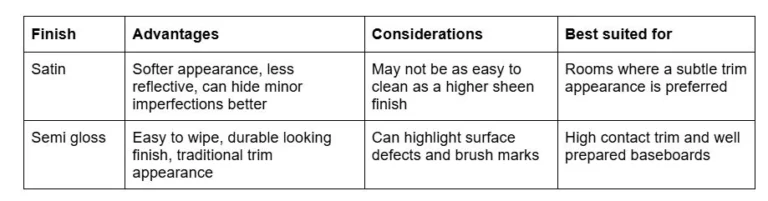
Neither finish is universally better. The decision comes down to how much sheen you want, how much cleaning the trim will receive and how well the surface has been prepared.
Book Your Free Estimate Today!
Ready to transform your space? Our team is here to help you get started with a no-obligation, on-site estimate. Whether it’s a quick refresh or a full makeover, we’ll guide you every step of the way.
Should You Use Water Based or Oil Based Paint?
Water based and oil based paints behave differently, so the choice should be based on the project rather than a blanket rule that one type is always superior.
Water Based Paint
Modern water based acrylic and acrylic alkyd trim paints can provide a durable finish while offering simpler cleanup and generally easier handling than traditional oil based coatings.
They are commonly used for interior trim because they can be a practical combination of durability, appearance and convenience. However, water based does not mean every product performs the same way. Read the manufacturer’s instructions for the specific paint, especially regarding compatible primers, recoating, surface preparation and curing.
Oil Based Paint
Oil based paint has historically been used extensively on wood trim because it can produce a hard, smooth coating. It also has disadvantages. Cleanup generally requires the solvent specified by the manufacturer and drying can be slower than with many water based products. Existing oil based coatings can also affect how a new water based product should be applied.
If an older home has several layers of existing trim paint, identifying the condition and type of the existing coating may be more important than simply choosing a paint based on its label.
Does the Baseboard Material Change the Paint Choice?
Yes. Wood and MDF baseboards can require different preparation even when the same general trim paint is used.
Paint for Wood Baseboards
Wood baseboards may be painted, stained, previously coated or partially bare. The condition of the wood determines the preparation required.
Bare wood generally needs a primer compatible with the finish system. Knots, stains, repaired areas and other problem spots may require additional preparation or a primer designed for that particular issue.
Previously painted wood should be cleaned and evaluated before repainting. Loose or peeling paint needs to be removed rather than simply covered with another coat.
Paint for MDF Baseboards
MDF has a smooth manufactured surface, but its cut edges can behave differently from its factory face.
The exposed edges can absorb primer or paint differently and may require particular attention during preparation. Water exposure is also a concern because MDF can swell when moisture gets into unprotected areas.
For MDF baseboards, pay close attention to damaged edges, joints and areas where the material has been cut or exposed.
The goal is not simply to put paint over the surface. The goal is to create a sound surface that the coating can properly adhere to.
How to Prepare Baseboards Before Painting
Good baseboard paint cannot compensate for a dirty, loose, damaged or poorly prepared surface. Start by removing dust, dirt, grease and other contaminants. A clean surface gives primer and paint a better chance of adhering consistently. Next, inspect the baseboards for:
- Peeling or loose paint.
- Dents and gouges.
- Nail holes.
- Cracks.
- Open joints.
- Damaged corners.
- Excessive caulk.
- Raised wood grain.
- Rough or glossy areas.
Remove loose material and repair defects before painting.
Sanding Baseboards
Sanding serves several purposes. It can smooth repairs, remove loose coating, reduce rough edges and dull a glossy existing finish so the new coating can adhere more effectively.
You do not necessarily need to remove every layer of sound existing paint. If the old coating is firmly attached, the objective is usually to create a clean, sound, reasonably smooth surface rather than stripping the entire baseboard down to bare material. After sanding, remove the resulting dust before painting.
Caulking Baseboards
Caulk can improve the finished appearance where appropriate, especially at gaps between trim and adjacent surfaces. It should not be used to cover significant structural movement, damaged material or problems that require another type of repair.
Use a paintable caulk when the product is intended to receive paint and follow its instructions for drying before applying the finish coat.
When Should Baseboards Be Primed?
Primer is particularly useful when the surface is bare, repaired, stained, difficult to adhere to or otherwise unsuitable for direct application of the finish paint.
It can also be important when changing between incompatible coating systems or when the existing surface creates adhesion concerns.
A primer is not automatically required simply because you are repainting an already sound, previously painted baseboard. The condition and type of the existing coating matter. Always check the primer and finish paint manufacturer’s instructions for compatibility.
Book Your Free Estimate Today!
Ready to transform your space? Our team is here to help you get started with a no-obligation, on-site estimate. Whether it’s a quick refresh or a full makeover, we’ll guide you every step of the way.
How to Paint Baseboards
Once the surface has been prepared, application technique becomes the next major factor. Protect the floor and nearby surfaces, then work in manageable sections. A quality brush is useful for cutting in and working around corners, joints and detailed trim profiles.
Apply paint in controlled coats rather than trying to achieve complete coverage with one heavy application. Thick paint can increase the risk of runs, sagging, visible brush marks and uneven drying.
Allow each coat to dry according to the product’s instructions before recoating. Dry to the touch does not necessarily mean the coating has fully cured.
How Many Coats Do Baseboards Need?
The number of coats depends on the paint, color, surface, primer and existing coating. Two finish coats are common when repainting trim, but that is not a universal rule. A properly primed surface with good coverage may require less, while a major color change or uneven substrate may require additional coating.
Coverage should be judged by the finished appearance and the manufacturer’s instructions rather than by an arbitrary number of coats.
Why Do Baseboards Get Brush Marks?
Brush marks can result from several problems, including:
- Using paint that is too thick or beginning to dry during application.
- Applying excessive pressure with the brush.
- Overworking paint that has started to set.
- Using an unsuitable or poor quality brush.
- Painting over an uneven surface.
- Applying an excessively heavy coat.
Preparation matters here as much as technique. If the baseboard has ridges, old brush marks, chipped paint or rough repairs underneath, a new coat may not hide them. Use controlled strokes and avoid repeatedly brushing an area after the paint has begun to lose its working time.
How to Keep Painted Baseboards Clean
Baseboards are close to the floor, so they naturally collect dust, pet hair, dirt and marks from shoes or household activity.
A washable paint finish makes routine maintenance easier, but cleaning should still be done carefully. Use a soft cloth or sponge and a cleaning method compatible with the paint manufacturer’s recommendations.
Avoid aggressive scrubbing, especially soon after painting. A coating may feel dry while continuing to cure and develop its final hardness.
Regular light cleaning is generally easier on the finish than allowing heavy buildup to accumulate and then trying to remove it with aggressive cleaners.
Book Your Free Estimate Today!
Ready to transform your space? Our team is here to help you get started with a no-obligation, on-site estimate. Whether it’s a quick refresh or a full makeover, we’ll guide you every step of the way.
Common Baseboard Painting Mistakes
1. Painting Over Dirt
Dust and grime can interfere with adhesion and leave an uneven finish. Cleaning should be part of the preparation rather than an afterthought.
2. Skipping Surface Repairs
Paint does not make dents, cracks, peeling coatings or damaged MDF disappear. Those defects can remain visible or become more noticeable after painting.
3. Using Wall Paint on Trim
Interior wall paint may not provide the same performance characteristics as a product specifically formulated for trim. Baseboards experience more physical contact than most wall surfaces, so the coating should be selected with that use in mind.
4. Applying One Heavy Coat
Trying to finish faster by applying excessive paint can create runs and an uneven surface. Multiple controlled coats generally give you more control over the finished appearance.
5. Ignoring Existing Gloss
A very glossy existing surface can create an adhesion problem if it is simply painted over without proper preparation. Cleaning, sanding and using a compatible primer when needed can address this issue.
6. Touching the Trim Too Soon
Paint that feels dry is not necessarily fully cured. Avoid heavy cleaning, repeated contact or placing objects against freshly painted trim until the product’s instructions indicate that the surface can handle it.
Conclusion
The best paint for baseboards is not determined by the label alone. Start with the surface itself. Look at the material, existing coating, damage, sheen and expected amount of cleaning. Then select a trim coating and compatible primer, if needed, that are designed for those conditions.
For most interior projects, satin and semi gloss are practical finishes, while water based acrylic or acrylic alkyd trim paints can offer a useful combination of durability and easier application. Oil based coatings remain relevant in some situations, particularly where their characteristics fit the existing system and project requirements.
Preparation should receive just as much attention as product selection. Cleaning, sanding, repairing damaged areas, addressing gaps where appropriate and priming problem surfaces can have a greater effect on the final appearance than simply choosing a more expensive can of paint.
A professional painting contractor such as Pro A&M Painting can also help evaluate the existing coating, surface condition and preparation requirements before the finish is selected.
The same basic decision process applies across homes in Worcester County and elsewhere: choose the coating for the surface, choose the sheen for how the trim will be used and prepare the baseboards well before the first finish coat goes on. When the project involves extensive repairs, difficult existing coatings, or large amounts of trim, Pro A&M Painting can assess the preparation and coating requirements before painting begins.