Hours: Mon - Sat 24/7


TL;DR
- A standard 4×8 sheet of 1/2-inch drywall weighs about 50 to 57 pounds, depending on the manufacturer and product type.
- Drywall weigh varies by thickness, size and specialty features such as moisture resistance or fire resistance.
- A 5/8-inch Type X drywall sheet typically weighs 70 to 74 pounds for a 4×8 panel.
- Lightweigh drywall can reduce the weigh of a standard sheet by 10% to 25%, making installation easier.
- Most drywall is made from a gypsum core wrapped in paper and different densities affect the final weight.
- Professional installers often carry drywall using panel carriers, drywall lifts or two person teams to reduce strain and improve safety.
- Knowing drywall sheet weight helps when planning transportation, storage, installation and structural loading.
If you’re wondering how much does a sheet of drywall weigh, the short answer is that most standard 4×8 drywall sheets weigh between 38 and 74 pounds, depending on the thickness and type of panel.
A basic 1/2-inch drywall panel used on most interior walls usually weighs around 50 to 57 pounds. Thicker panels, larger sheets and specialty products such as moisture resistant or Type X drywall weigh noticeably more because they contain denser gypsum cores or additional reinforcing materials.
Weigh isn’t just a number on a specification sheet. It affects how you transport drywall, whether one person can safely carry it, how many sheets fit in a pickup truck and even how efficiently a renovation project moves forward.
This blog explains drywall sheet weighs, why they vary and what experienced contractors consider before loading, lifting or installing wallboard.
Average Drywall Weigh
Drywall is manufactured in several thicknesses and lengths, but the weigh depends on more than dimensions alone. Factors that influence drywall sheet weigh include:
- Thickness.
- Panel size.
- Standard or lightweigh construction.
- Moisture resistant additives.
- Fire resistant gypsum core.
- Manufacturer specifications.
Although manufacturers publish slightly different weighs, the ranges below are representative of products commonly sold in the United States.
Drywall Type Typical 4×8 Sheet Weigh
1/4-inch drywall 38–40 lbs
3/8-inch drywall 44–46 lbs
1/2-inch standard drywall 50–57 lbs
1/2-inch lightweigh drywall 44–49 lbs
5/8-inch standard drywall 70–74 lbs
5/8-inch Type X drywall 70–76 lbs
These numbers may vary slightly from one manufacturer to another because gypsum density, paper facing and specialty additives differ between product lines.
Why Manufacturers List Different Weighs
Homeowners are often surprised to see two drywall sheets with identical dimensions but different published weighs.
That’s because drywall isn’t made from gypsum alone. The paper facing, moisture resistant additives, fiberglass reinforcement and fire resistant ingredients all contribute to the final weigh. Some manufacturers also engineer lighter gypsum cores that reduce weigh without sacrificing performance for standard residential walls.
Always check the product label if precise weigh matters for transportation or structural planning.
Does Drywall Weigh Vary by Thickness?
Yes. Thickness is the biggest factor affecting drywall sheet weigh. As drywall becomes thicker, more gypsum is packed into every square foot. Since gypsum is dense, even an extra 1/8 inch significantly increases the overall weigh. Here’s how common drywall thicknesses compare.
1/4-Inch Drywall Weigh
1/4-inch drywall is the lightest option available. It’s commonly used for:
- Covering existing walls.
- Repair projects.
- Curved walls.
- Creating smooth surfaces over damaged drywall.
A standard 4×8 sheet weighs approximately 38 to 40 pounds, making it much easier for one person to handle. Because it’s thin, 1/4-inch drywall isn’t intended for new wall framing.
3/8-Inch Drywall Weigh
3/8-inch drywall weighs approximately 44 to 46 pounds per 4×8 sheet. Although less common today, it still appears in remodeling work where existing wall thickness must be matched. Many contractors prefer thicker drywall for new construction because it offers greater rigidity.
1/2-Inch Drywall Weigh
1/2-inch drywall is the most common wallboard installed in American homes. A standard 4×8 sheet weighs between 50 and 57 pounds. This thickness provides an excellent balance between:
- Strength.
- Cost.
- Ease of installation.
- Smooth finishing.
Because of its versatility, 1/2-inch drywall is commonly installed on:
- Interior walls.
- Bedrooms.
- Living rooms.
- Hallways.
- Home offices.
- Finished basements.
Most DIY projects involve this thickness.
How Much Does 5/8 Drywall Weigh?
5/8-inch drywall is noticeably heavier. A standard 4×8 panel generally weighs 70 to 74 pounds, while some Type X products approach 76 pounds. The extra thickness improves:
- Fire resistance.
- Sound reduction.
- Ceiling rigidity.
- Resistance to sagging.
Commercial buildings often require 5/8-inch drywall because building codes specify greater fire protection. Many homeowners also choose it between garages and living spaces or around furnace rooms.
Book Your Free Estimate Today!
Ready to transform your space? Our team is here to help you get started with a no-obligation, on-site estimate. Whether it’s a quick refresh or a full makeover, we’ll guide you every step of the way.
Drywall Weigh by Size
Thickness isn’t the only factor affecting drywall sheet weigh. Larger sheets contain more gypsum, making them considerably heavier even when the thickness stays the same.
Weigh of a 4×8 Drywall Sheet
The classic 4×8 drywall panel is the most common size sold at home improvement stores. Typical weighs include:
- 1/4 inch: 38–40 lbs
- 3/8 inch: 44–46 lbs
- 1/2 inch: 50–57 lbs
- 5/8 inch: 70–74 lbs
These sheets fit comfortably in most residential rooms and are easier to maneuver through hallways and stairwells than longer panels.
Weigh of a 4×10 Drywall Sheet
Longer drywall sheets reduce seams but increase weigh. Approximate weighs include:
- 1/2 inch: 63–70 lbs
- 5/8 inch: 88–92 lbs
Contractors often use these panels in larger rooms where fewer joints create a smoother finished wall.
Weigh of a 4×12 Drywall Sheet
4×12 sheets are common in new construction because they minimize finishing work. Typical weighs are:
- 1/2 inch: 76–86 lbs
- 5/8 inch: 104–110 lbs
Although fewer seams improve appearance, these panels usually require two installers or mechanical lifting equipment.
Drywall Weigh Comparison Chart
The table below provides a quick reference for common drywall sheet weighs.
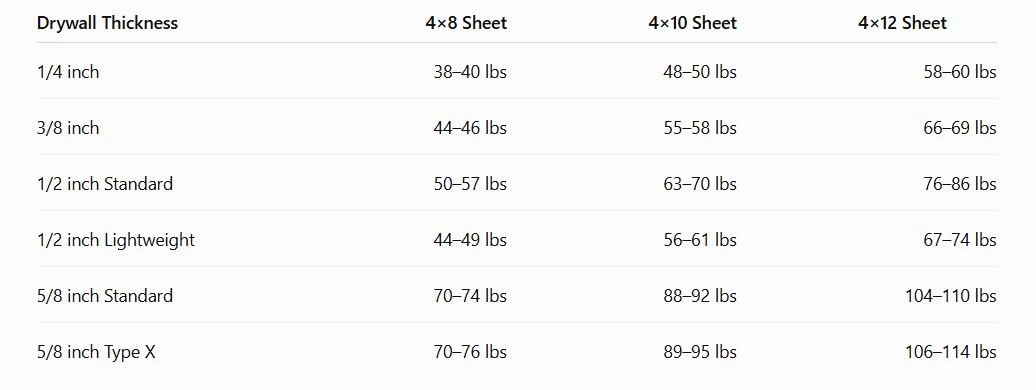
Use this chart as a planning tool rather than an exact specification. Product weighs vary slightly among manufacturers.
Book Your Free Estimate Today!
Ready to transform your space? Our team is here to help you get started with a no-obligation, on-site estimate. Whether it’s a quick refresh or a full makeover, we’ll guide you every step of the way.
Lightweigh Drywall vs. Standard Drywall
Lightweigh drywall has become increasingly popular over the last decade because it reduces lifting fatigue without sacrificing everyday performance on residential walls.
Instead of simply removing material, manufacturers redesign the gypsum core to lower overall density while maintaining the strength required for typical interior applications.
How Much Does Lightweigh Drywall Weigh?
A standard 4×8 sheet of 1/2-inch lightweigh drywall typically weighs between 44 and 49 pounds. Compared to standard drywall, that’s often 6 to 10 pounds less per sheet. That difference might seem small until you’re carrying dozens of sheets into a second floor bedroom. For example:
- 10 sheets can reduce lifting by roughly 60 to 100 pounds.
- 50 sheets can reduce total material handling by 300 to 500 pounds.
- Large remodeling projects become less physically demanding, especially when moving drywall through tight staircases or narrow hallways.
When Do Professionals Choose Lightweigh Drywall?
Experienced drywall installers often recommend lightweigh drywall for residential projects because it offers several practical advantages. It’s commonly used for:
- New home construction.
- Basement finishing.
- Home additions.
- Interior remodeling.
- Residential wall replacements.
However, lightweigh drywall isn’t the right choice for every application. Projects requiring enhanced fire ratings, greater impact resistance or specific commercial building code compliance often call for heavier specialty panels such as 5/8-inch Type X drywall.
Understanding the difference helps you choose the right material instead of simply picking the lightest sheet on the rack.
Why Drywall Weigh Matters
The weigh of drywall affects much more than carrying it from the truck to the house. It influences transportation, installation, labor and even safety.
Transportation
Drywall is heavy, bulky and difficult to stack incorrectly. Before buying materials, consider:
- Your vehicle’s payload capacity.
- Trailer weigh limits.
- How far the sheets must be carried.
- Weather conditions during transport.
A pickup truck may have enough bed space for dozens of sheets, but the payload rating is often the limiting factor.
Installation
Heavier sheets are harder to lift overhead and position accurately. For example:
- A 1/2-inch 4×8 sheet weighing about 54 pounds can often be installed by two people.
- A 5/8-inch 4×12 Type X sheet weighing over 100 pounds usually requires a drywall lift or multiple installers.
Choosing the right panel size can reduce fatigue and improve the quality of the finished installation.
Worker Safety
Drywall injuries usually happen because of poor lifting techniques rather than the weigh itself. Common injuries include:
- Back strains.
- Shoulder injuries.
- Finger pinches.
- Falls while carrying large panels.
- Cuts from damaged sheet edges.
Professionals treat drywall handling as a safety task, not simply a strength challenge.
How Professionals Carry Drywall Safely
Experienced drywall installers know that moving drywall efficiently is about technique, planning and the right equipment.
Use Drywall Panel Carriers
A drywall carrier clamps onto the bottom edge of the sheet and provides a comfortable handle. This allows one person to keep the panel upright with less strain on the hands and forearms.
Lift With Your Legs
Always squat before lifting and keep your back straight.
Avoid:
- Twisting while carrying.
- Bending at the waist.
- Jerking the sheet off the ground.
Instead, lift smoothly and keep the drywall close to your body.
Carry the Sheet Vertically
Professional installers usually carry drywall on its long edge.
This method:
- Improves balance.
- Makes the panel easier to control.
- Reduces the chance of cracking the gypsum core.
- Helps fit through doorways and hallways.
Use a Drywall Lift for Ceilings
Installing ceiling drywall without a lift is one of the hardest parts of a drywall project.
A drywall lift:
- Hold the panel securely overhead.
- Allows precise positioning.
- Reduces fatigue.
- Improves installation accuracy.
- Makes fastening easier.
Many rental centers offer drywall lifts by the day, making them a worthwhile investment for DIY projects.
Safety Tip: Never try to catch a falling drywall sheet. Step back and let it fall. A damaged panel is easier to replace than an injured hand or back.
Book Your Free Estimate Today!
Ready to transform your space? Our team is here to help you get started with a no-obligation, on-site estimate. Whether it’s a quick refresh or a full makeover, we’ll guide you every step of the way.
How Many Sheets of Drywall Fit in a Pickup Truck?
This is one of the most common questions homeowners ask before heading to the building supply store. The answer depends on payload capacity, not just bed size. Here’s a general guide for standard half ton pickup trucks.
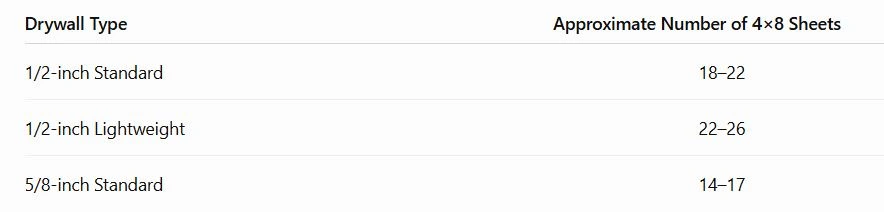
Actual capacity varies by truck model, suspension, payload rating, passengers and other cargo. Always follow the vehicle manufacturer’s maximum payload specification.
Keep in mind that drywall should lie flat on a clean, supported surface. Uneven support can crack the gypsum core before installation. If you’re transporting long sheets, secure them carefully to prevent movement or wind damage.
How Much Drywall Can One Person Carry?
The answer depends on three factors:
- The weigh of the sheet.
- The distance being carried.
- The person’s experience and physical condition.
A healthy adult may be able to carry a standard 1/2-inch 4×8 sheet over a short distance. However, the size of the panel often makes it more difficult than its weigh alone suggests.
Professionals frequently work in teams when handling:
- 5/8-inch drywall.
- 4×10 sheets.
- 4×12 sheets.
- Ceiling panels.
- Tight staircases.
- Finished homes where damage must be avoided.
If you’re working alone, renting a drywall cart or panel carrier can make the job safer and more manageable.
Common Mistakes When Handling Drywall
Many damaged sheets and job site injuries happen because of avoidable mistakes.
1. Buying the Wrong Thickness
Some homeowners purchase 5/8-inch drywall when standard 1/2-inch panels would meet their needs. The heavier sheets increase lifting effort without providing additional benefits unless required by building codes or the project.
2. Ignoring Vehicle Payload Limits
It’s easy to focus on how many sheets fit in the truck bed while overlooking how much weigh the truck is designed to carry. Overloading a vehicle can affect braking, handling and suspension performance.
3. Carrying Panels Flat
Holding drywall flat places more stress on the panel and makes it difficult to control. Keeping the sheet on its edge helps distribute weigh and reduces the risk of cracking.
4. Storing Drywall Incorrectly
Drywall should always be stored flat on a dry, level surface. Leaning sheets against a wall for long periods can cause bowing, edge damage or broken corners.
5. Forgetting About Moisture
Drywall is designed for dry storage. If it becomes saturated before installation, the gypsum core can weaken and the paper facing may separate or support mold growth.
Book Your Free Estimate Today!
Ready to transform your space? Our team is here to help you get started with a no-obligation, on-site estimate. Whether it’s a quick refresh or a full makeover, we’ll guide you every step of the way.
Practical Tips From the Job Site
After years of installing drywall in homes, remodel and commercial spaces, a few habits consistently save time and reduce problems.
- Measure doorways before buying 12-foot sheets.
- Move drywall into the house before rainy weather whenever possible.
- Stack sheets close to the room where they’ll be installed to avoid unnecessary carrying.
- Inspect corners and edges before accepting delivery.
- Use longer sheets only when they truly reduce seams enough to justify the extra weight.
- Wear gloves with a good grip to protect your hands without reducing control.
- Keep the work area clear so you don’t have to step over tools or debris while carrying large panels.
Small planning decisions often make installation faster and help prevent damaged materials.
When Drywall Weight Matters Most
Some projects are more sensitive to drywall weight than others. Pay close attention when you’re:
- Finishing a basement.
- Remodeling an older home with narrow stairways.
- Installing ceiling drywall.
- Working alone.
- Loading materials into a pickup truck.
- Ordering large quantities for a whole house renovation.
- Meeting fire rated wall or ceiling requirements.
Thinking through these details before the project begins can save time, reduce waste and make installation much safer.
Related Home Improvement Services
Many homeowners discover drywall issues while preparing for larger remodeling projects. Repairing damaged wallboard before painting creates a smoother finish and helps new paint last longer.
If you’re updating an older home, services such as drywall repair, interior painting and popcorn ceiling removal are often completed together to minimize disruption and achieve a consistent appearance.
Many homeowners ask Pro A&M Painting about the best order for these projects. In most cases, drywall repairs are completed first, followed by ceiling work if needed and then interior painting once the new surfaces are properly finished and primed.
Conclusion
Understanding how much does a sheet of drywall weigh helps you plan every stage of a project, from purchasing materials to installation.
While a standard 1/2-inch 4×8 drywall sheet typically weighs between 50 and 57 pounds, the actual weight depends on the panel’s thickness, dimensions and construction. Moisture resistant, fire rated and Type X products weigh more because they’re built for specific performance requirements.
Choosing the right drywall isn’t only about weight. It’s about selecting the panel that fits your project, transporting it safely and handling it correctly to avoid damage and injury. When in doubt, checking the manufacturer’s specifications and using proper lifting equipment can make the job safer and far more efficient.
Pro A&M Painting recommends matching the drywall type to the room, local building code requirements and installation conditions rather than choosing solely based on weight.