Your Home Deserves a Painter You Can Trust


If you’re wondering how much does a 5 gallon bucket of paint weigh, the answer is typically between 53 and 65 pounds, including the paint, plastic bucket and lid. The exact weight depends on the paint type, formulation, density and container. Interior latex, exterior acrylic, oil based paint and primers can all have different weights.
TL;DR
- Paint only: Approximately 50 to 60 pounds for many common architectural paints.
- Full bucket with lid: Roughly 53 to 63 pounds, depending on the product and container.
- Empty plastic bucket with lid: Commonly around 2.5 to 3 pounds, although specifications vary.
- Oil based paint: Weight varies by formulation and finish; it is not automatically heavier than latex paint.
- Primer: Often weighs around 50 to 61 pounds per five gallons, depending on its formulation.
- Exact weight: Multiply the manufacturer’s stated weight per gallon by five, then add the empty container’s weight.

These figures are estimates, not universal specifications. For an accurate figure, check the product’s technical data sheet (TDS), safety data sheet (SDS) or packaging information.
Average Weight of a 5 Gallon Bucket of Paint
The weight of a five gallon paint bucket depends primarily on the density of the liquid inside. Five gallons of paint do not necessarily weigh the same as five gallons of another paint product, even when both are intended for similar surfaces.
McCormick Paints lists its Total Advantage interior latex eggshell coating at 10.8 to 11.0 pounds per gallon. Five gallons of that paint would weigh approximately 54 to 55 pounds before adding the bucket and lid. Its interior latex flat coating is listed at 12.3 to 12.5 pounds per gallon, which works out to 61.5 to 62.5 pounds for five gallons of paint alone.
That difference shows why a single weight estimate cannot apply to every product. For practical planning, use the following general ranges:
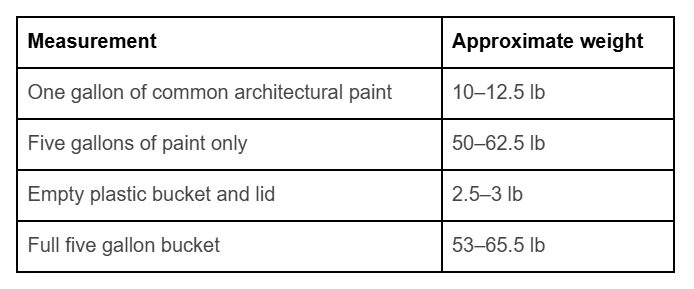
These ranges are useful for estimating lifting and transport loads. Actual product specifications take priority, particularly for heavier specialty coatings, primers and industrial paints.
How Much Does a 5 Gallon Bucket Weigh by Paint Type?
Different paint types use different resins, pigments, liquids and additives. Their weights can overlap considerably, so the product formulation matters more than the label alone.
The following table provides planning estimates based on published coating specifications and typical packaging weights. The ranges are not guarantees for every brand or finish.
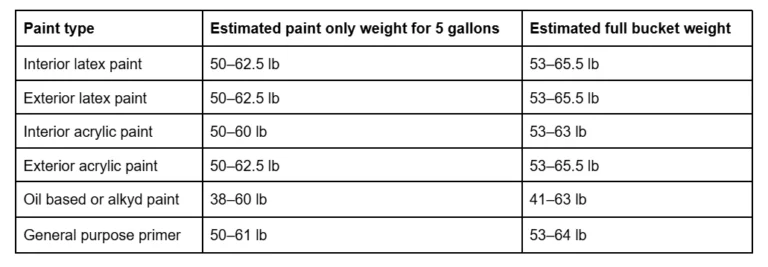
Important: These are broad estimates for planning purposes. Acrylic and latex categories overlap because many latex paints use acrylic or vinyl acrylic binders. Some oil based products are lighter per gallon than common latex paints, while heavily pigmented alkyd coatings can weigh more.
Interior latex paint
Interior latex paint is commonly used on drywall, plaster and previously painted walls and ceilings. Manufacturer specifications for these products often place their weight near 10 to 12.5 pounds per gallon.
A five gallon bucket can therefore contain approximately 50 to 62.5 pounds of paint. Flat, eggshell, satin and semi gloss products may have different weights, even within the same brand.
Exterior latex and acrylic paint
Exterior paints must withstand weather exposure and are formulated for outdoor surfaces such as siding, trim and masonry. Their weights vary with the binder, pigment package and intended application.
Acrylic latex exterior paints often fall within a similar general weight range to interior coatings. However, some masonry paints, textured coatings and high build products can be heavier. Check the exact product specification instead of assuming all exterior paint weighs the same.
Oil based paint
Oil based paints, commonly formulated with alkyd resins, use organic solvents rather than water as their primary liquid carrier. However, the solvent type alone does not determine the finished paint’s density.
Rust Oleum’s published technical data for its RO-203 alkyd enamel lists weights ranging from 7.6 to 11.4 pounds per gallon, depending on the finish. Five gallons at those listed rates would weigh approximately 38 to 57 pounds before packaging.
This illustrates why oil based paint is not automatically heavier than latex paint. A particular product’s pigments, resin, solvent and finish can make a substantial difference.
Primer
Primer weight depends on its purpose. General purpose latex primers, stain blocking primers, masonry primers and alkyd primers can have different densities.
McCormick Paints lists one acrylic latex coating at 11.4 pounds per gallon, while Rust Oleum lists certain alkyd primers at approximately 12.1 to 12.2 pounds per gallon. These examples show that some primers are relatively heavy, but primer does not always weigh more than finish paint. Use the manufacturer’s stated weight per gallon when calculating the load for a particular primer.
Book Your Free Estimate Today!
Ready to transform your space? Our team is here to help you get started with a no-obligation, on-site estimate. Whether it’s a quick refresh or a full makeover, we’ll guide you every step of the way.
Why Does Paint Weight Vary?
Several factors explain why one five gallon bucket can weigh more than another.
1. Paint density
Density describes how much mass a material contains in a given volume. Paint with a higher density weighs more when the same volume is measured. Five gallons is a measurement of volume, not weight. A denser paint can therefore weigh several pounds more than a less dense product in the same bucket.
2. Water and solvent content
Water based paints contain water as their primary liquid carrier, while many oil based paints use organic solvents. These liquids have different physical properties, but their presence alone does not determine the overall weight. The amount of liquid, the type of binder,and the other ingredients all contribute to the final density.
3. Pigments and mineral fillers
Pigments provide color and hiding power. Mineral fillers and extenders help control properties such as texture, coverage and film performance. Some pigments and mineral materials are relatively dense. As a result, changes in pigment loading or formulation can affect the weight per gallon.
4. Resin and binder composition
The binder forms the film that remains after the paint dries. Acrylic, vinyl acrylic and alkyd systems have different formulations and their proportions of resin and other ingredients affect the final product’s density. The resin category alone is not enough to predict the exact weight.
5. Color, sheen and product formulation
Different tint bases and added colorants can change the final weight. Finish level also matters because flat and glossy coatings may use different combinations of pigments, binders and additives. This is why two paints from the same manufacturer can have different published weights per gallon. When precision matters, use the specification for the exact product and, where applicable, the specific base or color.
Paint Weight vs Empty Bucket Weight
When estimating the weight of a five gallon paint bucket, it is important to distinguish between net weight and gross weight.
- Net weight: The weight of the paint itself, excluding its container.
- Tare weight: The weight of the empty container and its included packaging, as defined by the relevant specification.
- Gross weight: The combined weight of the paint, bucket, lid and any other packaging included in the measurement.
A container’s weight might seem insignificant compared with the paint, but it still matters when calculating the total load for lifting or transport.
How much does an empty five gallon paint bucket weigh?
An empty plastic five gallon pail and lid commonly weigh around 2.5 to 3 pounds, although the exact figure depends on the design and materials.
TranPak’s five gallon pail specifications list a plastic pail at 2.08 pounds and its lid at 0.72 pounds. Together, they weigh 2.80 pounds.
Another supplier, The Cary Company, lists a different five gallon pail weighing 2.1 pounds with its handle, plus a 0.55-pound lid.
These are container specific measurements, not universal values for every paint bucket. Metal containers, heavy duty plastic pails and specialty packaging may weigh more.
How much does the empty bucket add to the total?
Consider a paint product weighing 55 pounds for five gallons. If its empty bucket and lid weigh 2.8 pounds, the combined weight is: 55 + 2.8 = 57.8 pounds
The full bucket would therefore weigh approximately 57.8 pounds, assuming the five gallon paint quantity and container weights are accurate. For shipping calculations, remember that external packaging, protective materials and pallets can add further weight.
Book Your Free Estimate Today!
Ready to transform your space? Our team is here to help you get started with a no-obligation, on-site estimate. Whether it’s a quick refresh or a full makeover, we’ll guide you every step of the way.
How to Calculate the Weight of 5 Gallons of Paint
You can estimate the weight of almost any paint product using a simple formula.
Paint weight = Weight per gallon × Number of gallons
To calculate the gross weight of a full bucket, add the weight of the empty container and lid.
Example calculation
Suppose a technical data sheet lists a paint at 11 pounds per gallon.
- Multiply the stated weight per gallon by five: 11 × 5 = 55 pounds.
- Add the empty bucket and lid, assuming they weigh 2.8 pounds.
- Calculate the combined weight: 55 + 2.8 = 57.8 pounds.
The estimated gross weight is 57.8 pounds. This calculation assumes the container holds five actual gallons of paint and that the listed weight per gallon applies to the product being purchased.
Why multiplying by five is only an estimate
A calculation is only as reliable as the information used. Several factors can affect the result:
- The listed weight may vary by color or tint base.
- The container might not contain exactly five gallons.
- The product specification may describe a particular finish or formulation.
- The empty bucket and lid may differ from the assumed packaging weight.
- The label may identify nominal container capacity rather than the exact quantity currently inside.
If a bucket is partly used, calculate the remaining paint weight based on the amount left rather than treating it as a full five gallon container. For an exact total, weigh the complete container on a suitable scale.
Tips for Carrying and Transporting a 5 Gallon Bucket of Paint
A full five gallon bucket can weigh more than 60 pounds. Its wide shape, handle position and liquid contents can make it awkward to lift, even for someone accustomed to handling paint supplies. Use these practical precautions when moving paint around a home or transporting it to a job site.
Lift with a stable stance
Before lifting, check that the handle is secure and that the lid is properly seated. Place your feet in a stable position, bend your hips and knees as needed and keep the load close to your body.
Avoid twisting your torso while lifting. If the bucket feels too heavy or awkward, use a suitable cart or ask another person for help rather than attempting to manage the load alone.
Use both hands when needed
A bucket’s handle is useful for carrying, but holding a full container at arm’s length can strain the wrist, shoulder and back. For short moves, keep the bucket close to your body and maintain a firm grip. When practical, support the container with both hands while keeping your fingers clear of pinch points around the lid and handle. Do not carry a heavy bucket if pain, fatigue, poor balance or an obstructed path makes the movement unsafe.
Prevent spills during transport
Before moving the bucket:
- Check for cracks, leaks or damage around the rim.
- Secure the lid according to the manufacturer’s instructions.
- Keep the bucket upright and avoid sudden movements.
- Clear the route of obstacles and trip hazards.
- Use a wheeled carrier when moving multiple buckets or covering longer distances.
Do not rely on a loose lid to prevent spills. If the bucket has been opened, confirm that the lid is properly secured before transporting it.
Secure paint buckets inside a vehicle
Place paint containers upright on a flat, stable surface. Secure them against tipping or sliding during braking and turns. A cargo restraint or suitable container holder can help keep the buckets in place.
Protect the vehicle’s interior with a spill resistant liner or other suitable covering. Do not place heavy buckets where they can obstruct the driver, interfere with vehicle controls or become unsecured cargo.
For oil based paints and other solvent containing coatings, follow the product’s specific transport, ventilation, storage and fire safety instructions. Check the label and SDS for any additional precautions.
Follow product specific storage instructions
Keep paint in its recommended temperature range and protect it from conditions that could damage the product or container. Avoid freezing water based paint, excessive heat and storage arrangements that could cause containers to fall.
If you are unsure how a particular coating should be handled or stored, consult its technical documentation rather than assuming all paints have the same requirements.
Conclusion
A five gallon bucket of paint typically weighs around 53 to 65 pounds when full, including the paint, plastic bucket and lid. The actual weight can fall outside that range because paint formulations and packaging vary.
For a quick estimate, multiply the manufacturer’s stated weight per gallon by five and add the container weight. For accurate lifting, shipping or vehicle load calculations, use the specific product documentation or weigh the actual container.
Pro A&M Painting recommends checking product specifications before moving large quantities of paint. A few minutes spent confirming the weight can help you choose the right handling method and avoid unnecessary strain or spills.