Your Home Deserves a Painter You Can Trust
TL;DR
- Yes, you can paint over stained wood with the right prep process.
- Cleaning, sanding and priming determine whether the paint lasts or fails.
- A stain blocking or bonding primer is essential to stop bleed through.
- Oil based stains require stronger primers than water based stains.
- Skipping prep leads to peeling, uneven finish and wasted time and money.
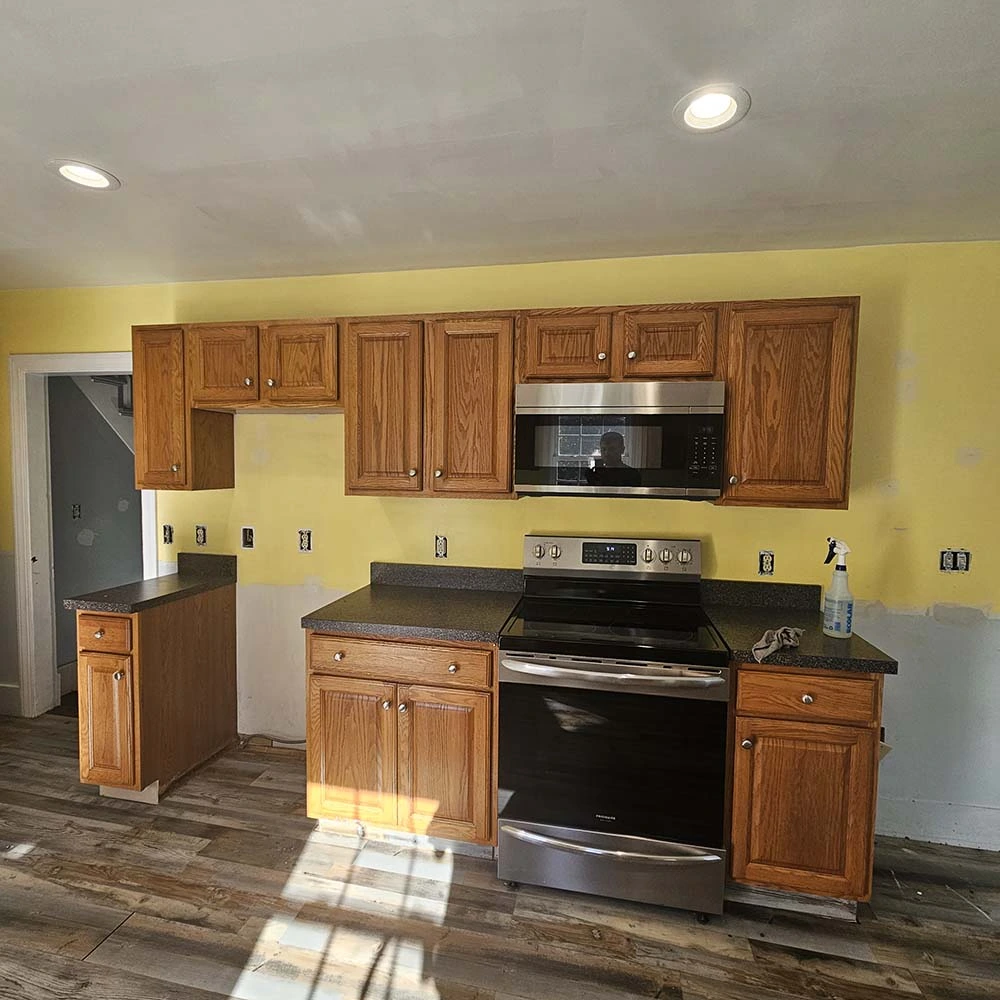
Painting wood that has already been stained is one of the most practical upgrades a homeowner can make. Instead of replacing cabinets, trim or furniture, you can transform the look with paint. The real question is not just can you paint over stained wood, but how to do it in a way that delivers a smooth, durable finish that holds up over time.
From a professional standpoint, this is not a shortcut project. It is a system. When done right, the result looks factory finished. When done wrong, the paint fails quickly. This blog gives you a clear, experience based process that works in real homes.
Why Homeowners Ask: Can You Paint Over Stained Wood
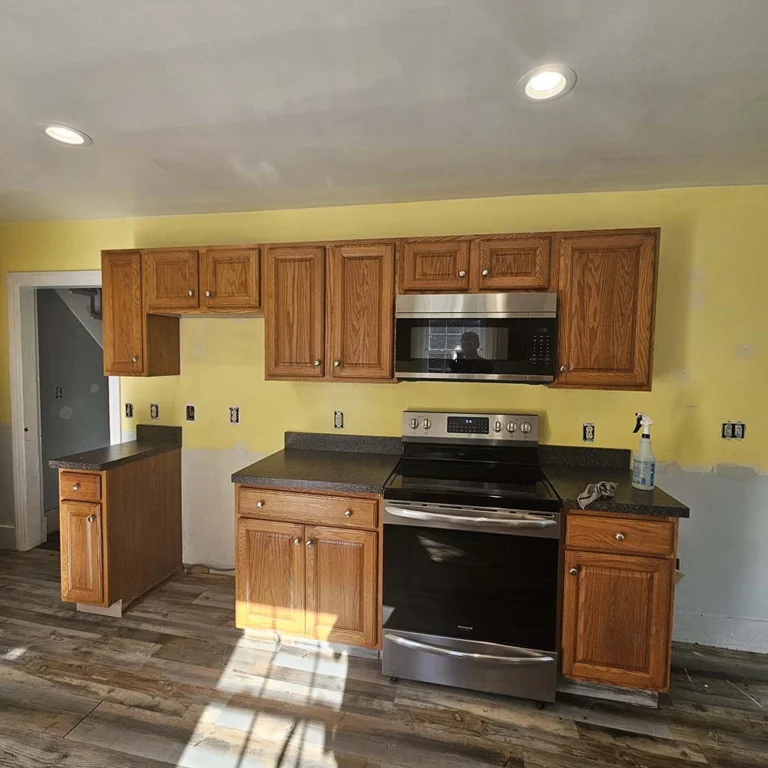
Most stained wood surfaces were originally designed to highlight the grain, not to be painted. Over time, styles change. Dark stains feel outdated. Yellow toned finishes no longer match modern interiors. That is when homeowners start searching can you paint over stained wood as a cost effective solution.
The answer is yes, but the surface condition matters more than the stain itself. Stained wood is typically sealed with a protective coating and that coating is what creates challenges.
What You Are Really Painting Over
You are not painting directly on raw wood. You are painting over a sealed surface.
Common Finishes Found on Stained Wood
- Polyurethane
- Varnish
- Lacquer
- Wax or oil finishes
Each of these creates a smooth, non porous layer. Paint does not naturally bond to that type of surface without preparation.
Why Paint Fails Without Prep
If you skip prep, you are relying on paint to stick to a slick coating. That rarely works.
Real Issues That Show Up
- Peeling within weeks or months.
- Visible stains bleeding through paint.
- Uneven texture or patchy color.
- Reduced durability in high use areas.
This is why professionals treat prep as the most important part of the job.
The Proven Process to Paint Over Stained Wood
If you want results that last, you need a repeatable method. This is the same system used by professionals on cabinets, trim and doors.
Step by Step Process That Delivers Results
Each step builds on the next. Skipping one step weakens the entire finish.
Step 1: Deep Cleaning Is Non Negotiable
Before sanding or priming, the surface must be clean.
- Use a degreaser or TSP substitute.
- Focus on areas exposed to oils and hands.
- Rinse with clean water.
- Allow the surface to dry fully.
Grease and residue block adhesion. If the surface is not clean, primer will not bond correctly.
Step 2: Sanding for Adhesion, Not Removal
You are not trying to strip the stain completely. You are creating a mechanical bond.
- Use 120 to 150 grit sandpaper.
- Lightly scuff the entire surface.
- Pay attention to glossy areas.
- Remove dust with a damp cloth or tack cloth.
This step gives primer something to grip onto.
Step 3: Apply the Right Primer
Primer is where most DIY projects succeed or fail. When asking can you paint over stained wood, the real answer depends on primer selection.
- Use a bonding primer for smooth surfaces.
- Use an oil based or shellac primer for heavy stains.
- Apply an even coat without overloading.
- Allow full drying time.
A quality primer blocks stains and creates a surface paint can adhere to.
Step 4: Paint with a Controlled Approach
Now you are ready for paint, but application matters.
- Use high quality acrylic or enamel paint.
- Apply thin, even coats.
- Allow proper drying between coats.
- Lightly sand between coats if needed.
Two thin coats outperform one heavy coat every time.
Choosing the Right Products for Long Term Performance
Product selection is not about brand loyalty. It is about performance on sealed wood surfaces.
Best Primers for Stained Wood
Different situations require different primers.
High Performance Primer Options
- Oil based primer for strong adhesion and durability.
- Shellac based primer for blocking heavy stains and tannins.
- Bonding primer for lightly sealed surfaces.
Each type solves a specific problem. Choose based on your surface condition.
Best Paint Types for Durability
The type of paint you use affects both appearance and lifespan.
Recommended Paint Types
- Acrylic enamel for cabinets and high use areas.
- Semi gloss latex for trim and doors.
- Furniture paint or enamel for standalone pieces.
Avoid low grade paint. It does not hold up on previously stained surfaces.
Can You Paint Over Stained Wood Without Sanding
This is one of the most common follow up questions. People want to save time and effort. The honest answer is yes in limited situations, but it comes with risk.
When You Might Skip Sanding
There are scenarios where sanding can be reduced.
Conditions That Allow It
- The surface is already dull or slightly worn.
- You are using a high quality bonding primer.
- The finish is not glossy.
Even in these cases, light scuffing improves results.
When Sanding Is Required
For most projects, sanding is the safer choice.
Situations Where You Should Not Skip It
- Glossy or polished finishes.
- Surfaces with heavy polyurethane.
- Cabinets exposed to grease and moisture.
If durability matters, sanding should not be skipped.
Book Your Free Estimate Today!
Ready to transform your space? Our team is here to help you get started with a no-obligation, on-site estimate. Whether it’s a quick refresh or a full makeover, we’ll guide you every step of the way.
Where You Can Paint Over Stained Wood Successfully
Understanding how this applies in real spaces helps you make better decisions.
Kitchen Cabinets
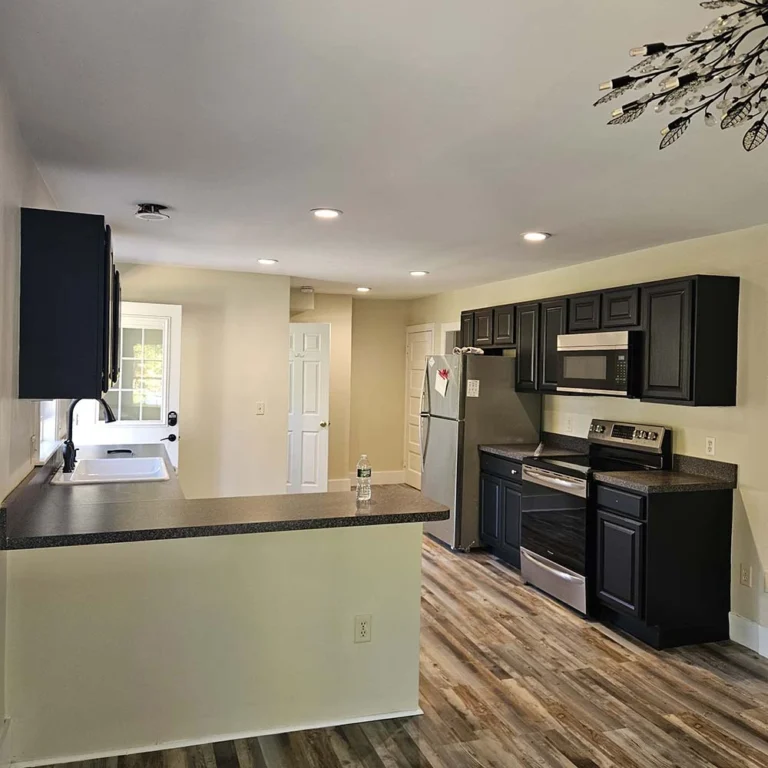
Cabinets are the most common reason homeowners search can you paint over stained wood.
What Makes Cabinets Different
- High exposure to grease and moisture.
- Frequent contact and wear.
- Complex surfaces with edges and corners.
Proper prep and high quality products are critical here.
Interior Trim and Doors
Trim is easier but still requires attention to detail.
Best Practices for Trim
- Light sanding is usually enough.
- Use semi gloss paint for durability.
- Focus on smooth brush or roller application.
Trim reflects light, so imperfections are easy to see.
Furniture Projects
Furniture is often the entry point for DIY painting projects.
Tips for Better Results
- Sand evenly across all surfaces.
- Use a primer designed for furniture.
- Apply thin coats for a smooth finish.
Furniture projects allow more flexibility but still require discipline.
Common Mistakes That Cost You Time and Money
Mistakes are predictable in this type of project. Knowing them helps you avoid them.
Mistakes That Lead to Failure
These are the issues professionals are often hired to fix.
What to Avoid
- Skipping cleaning before sanding.
- Using no primer or the wrong primer.
- Applying thick coats of paint.
- Not allowing proper drying time.
- Ignoring surface defects.
Each of these reduces the lifespan of your finish.
At Pro A&M Painting, many projects involve correcting these exact mistakes. The difference between a short term result and a long term finish is the process.
Book Your Free Estimate Today!
Ready to transform your space? Our team is here to help you get started with a no-obligation, on-site estimate. Whether it’s a quick refresh or a full makeover, we’ll guide you every step of the way.
How Long Does Painted Stained Wood Last
Durability is one of the biggest concerns when deciding if this project is worth it.
Expected Lifespan with Proper Prep
When done correctly, painted stained wood can last for years without issues.
Factors That Affect Durability
- Quality of prep work.
- Type of primer used.
- Paint quality and application.
- Environmental exposure.
- Level of daily use.
High traffic areas require stronger coatings and more attention to detail.
Professional Insight
You can complete this project yourself if you follow the process carefully. The challenge is not the steps. It is the consistency.
Most homeowners underestimate prep time. Cleaning, sanding and priming take longer than painting. That is where quality is built.
Pro A&M Painting approaches every stained wood project with a system focused on durability. The goal is not just appearance. It is performance over time.
Conclusion: Can You Paint Over Stained Wood
Yes, you can. The key is preparation, product selection and application.
The question can you paint over stained wood has a simple answer, but the execution determines the outcome. If you clean, sand, prime and paint correctly, you will get a smooth, long lasting finish. If you skip steps, the paint will fail.
What You Should Remember
Painting over stained wood is not complicated, but it requires discipline.
- Clean the surface thoroughly before anything else.
- Sand to create adhesion.
- Use a stain blocking or bonding primer.
- Apply high quality paint in thin coats.
- Allow proper drying between each step.
Follow this system and you will achieve results that look professional and last for years.